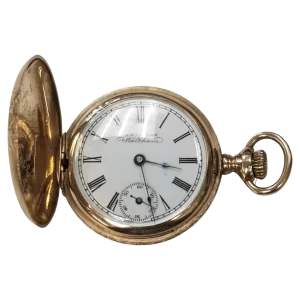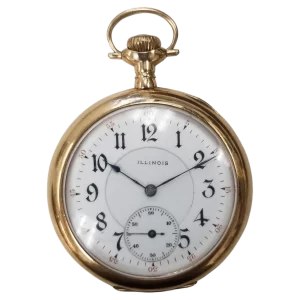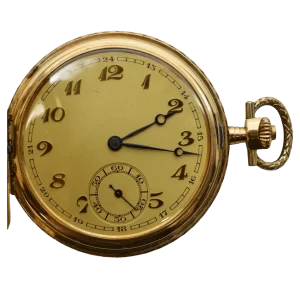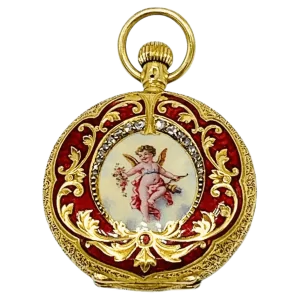
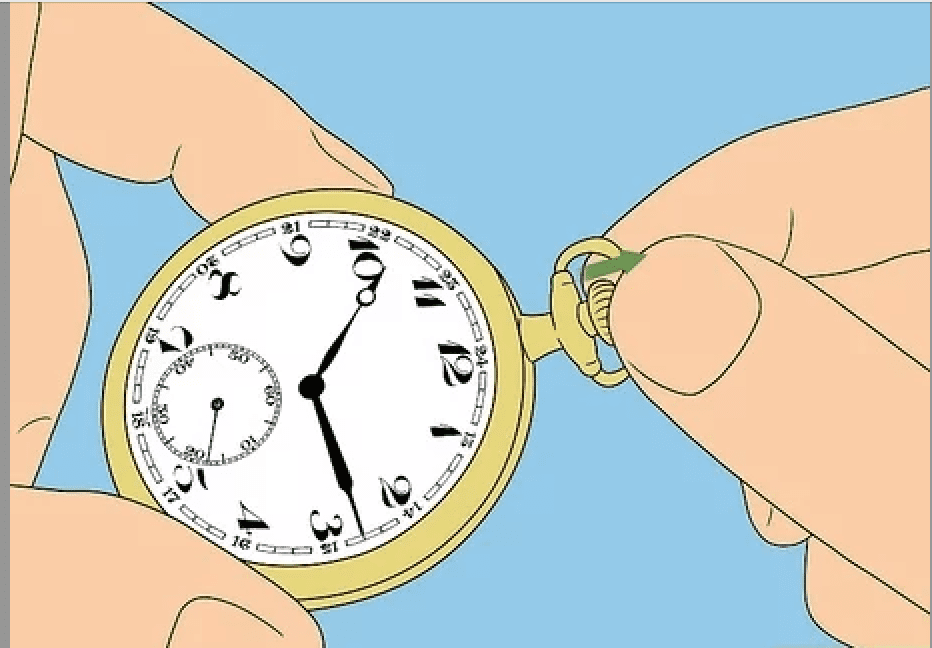
Els rellotges de butxaca antics són relíquies fascinants del passat, cadascuna amb el seu propi mètode únic per ajustar l'hora. Si bé molts poden suposar que ajustar un rellotge de butxaca és tan senzill com treure la tija de corda, de manera similar als rellotges de polsera moderns, això no és universalment cert. De fet, hi ha quatre mètodes principals per ajustar aquests rellotges complexos, i utilitzar una tècnica incorrecta pot danyar potencialment el rellotge. El mètode més familiar és el conjunt de tiges, també conegut com a conjunt de penjolls, on es tira de la corona a la part superior de la tija i es gira per ajustar l'hora. Tanmateix, si la corona es resisteix al moviment, és probable que el rellotge utilitzi un mecanisme d'ajust diferent. Un altre mètode comú és el conjunt de palanca, que es troba freqüentment en rellotges de ferrocarril fabricats als Estats Units i altres varietats. Aquest mètode consisteix a estirar una petita palanca, normalment situada a prop de la posició de les 2:00 o les 4:00, i després girar la tija per ajustar les agulles. Aquest mecanisme de palanca va ser dissenyat com a mesura de seguretat per evitar canvis accidentals d'hora, especialment crucial en el món precís del cronometratge ferroviari. Comprendre aquests diferents mètodes d'ajust és essencial per a qualsevol aficionat als rellotges de butxaca antics, garantint la preservació i el bon funcionament d'aquestes peces atemporals.
La majoria de la gent pensa que es pot ajustar un rellotge de butxaca de la mateixa manera que es configura un rellotge de polsera: estirant la tija de corda. Bé, això és cert amb molts rellotges de butxaca, però no amb tots! De fet, hi ha quatre maneres principals de configurar els rellotges de butxaca, i si no sabeu com es configura el vostre rellotge, el podeu trencar estirant massa fort la tija.
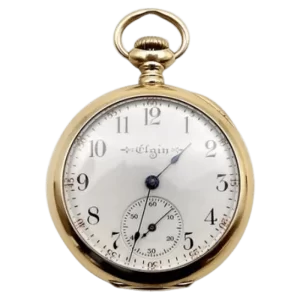
Conjunt de tija [també anomenat "conjunt de penjoll"]. Probablement ja coneixeu aquest: estireu la corona que hi ha a sobre de la tija i la gireu per ajustar l'hora. Si estireu la corona i no es mou, és probable que el vostre rellotge no estigui ajustat amb la tija.
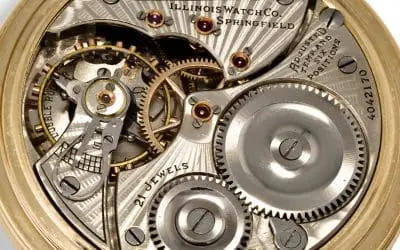
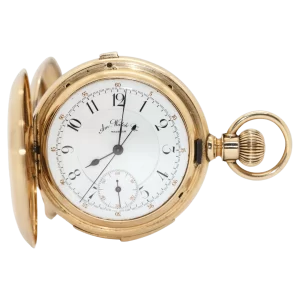
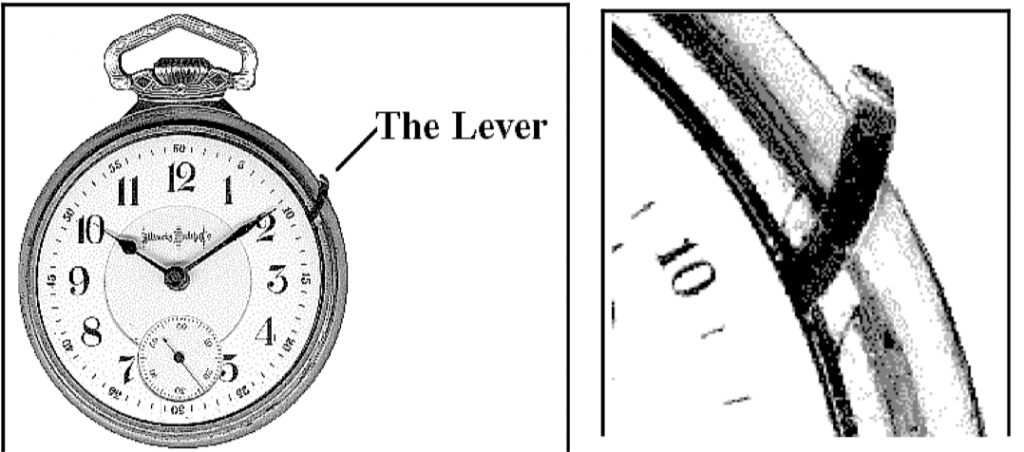
Palanca de configuració. Sovint es troba en rellotges de ferrocarril fabricats als Estats Units, però també en altres rellotges, el mecanisme d'ajust de la palanca requereix que estireu una petita palanca [una fina làmina de metall que normalment es troba a prop de la posició de les 2:00 o les 4:00]. A continuació, gireu la tija per moure les agulles. Aquesta era una mesura de seguretat per evitar que el rellotge es reiniciés accidentalment quan algú estirés la tija. En els rellotges amb caixa Hunter, la palanca hauria de ser visible simplement obrint la coberta frontal. En un rellotge de cara oberta, però, normalment heu de treure el bisell frontal per exposar la palanca. Aneu amb MOLT de compte en fer-ho, ja que és massa fàcil danyar el vidre i/o l'esfera en el procés.
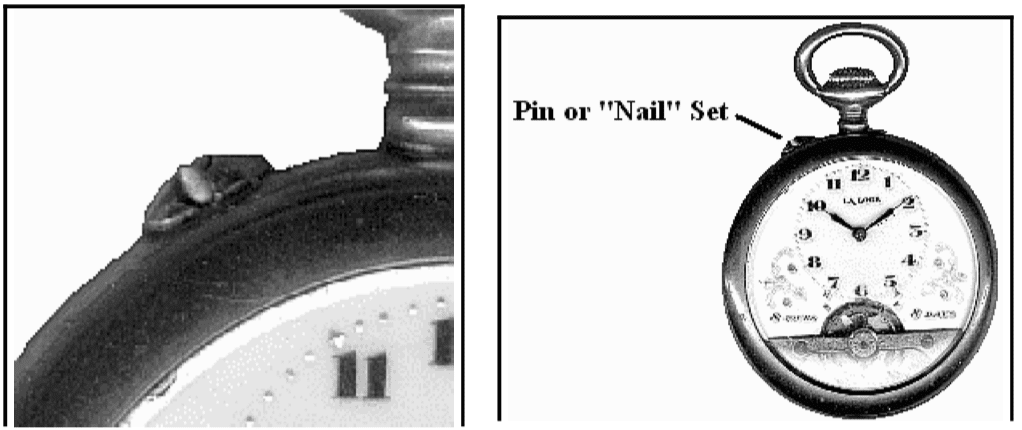
Conjunt de passadors. També anomenat "conjunt de claus", es tracta d'un petit botó que es troba a la caixa, immediatament a l'esquerra o a la dreta de la tija, que s'ha de prémer i mantenir premut mentre es gira la tija. Tenia la mateixa funció que el mecanisme de palanca, però normalment es troba en els rellotges de butxaca europeus.
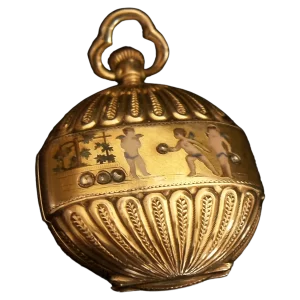
Conjunt de claus. Si necessiteu una clau per donar corda al rellotge, és probable que també en necessiteu una per ajustar-lo. Normalment s'utilitza una sola clau per donar corda i ajustar un rellotge determinat, però no sempre. Alguns rellotges de corda amb clau tenen dos forats a la part posterior, un per donar corda i un per ajustar-lo, i el forat d'ajust és el que hi ha al centre. Altres rellotges de corda amb clau, però, s'ajusten des de la part frontal, cosa que requereix que traieu el bisell i col·loqueu la clau directament a l'eix central que passa per les agulles de les hores i els minuts.