EARLY AUTOMATON REPEATER – 1710

Signed Poncet London
Circa 1710
Diameter 56 mm
Depth 18.5 mm

£7,270.00

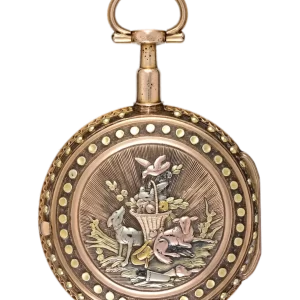
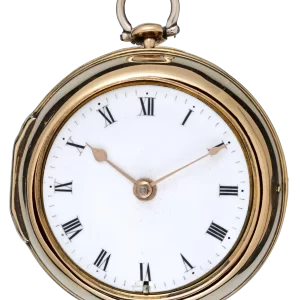
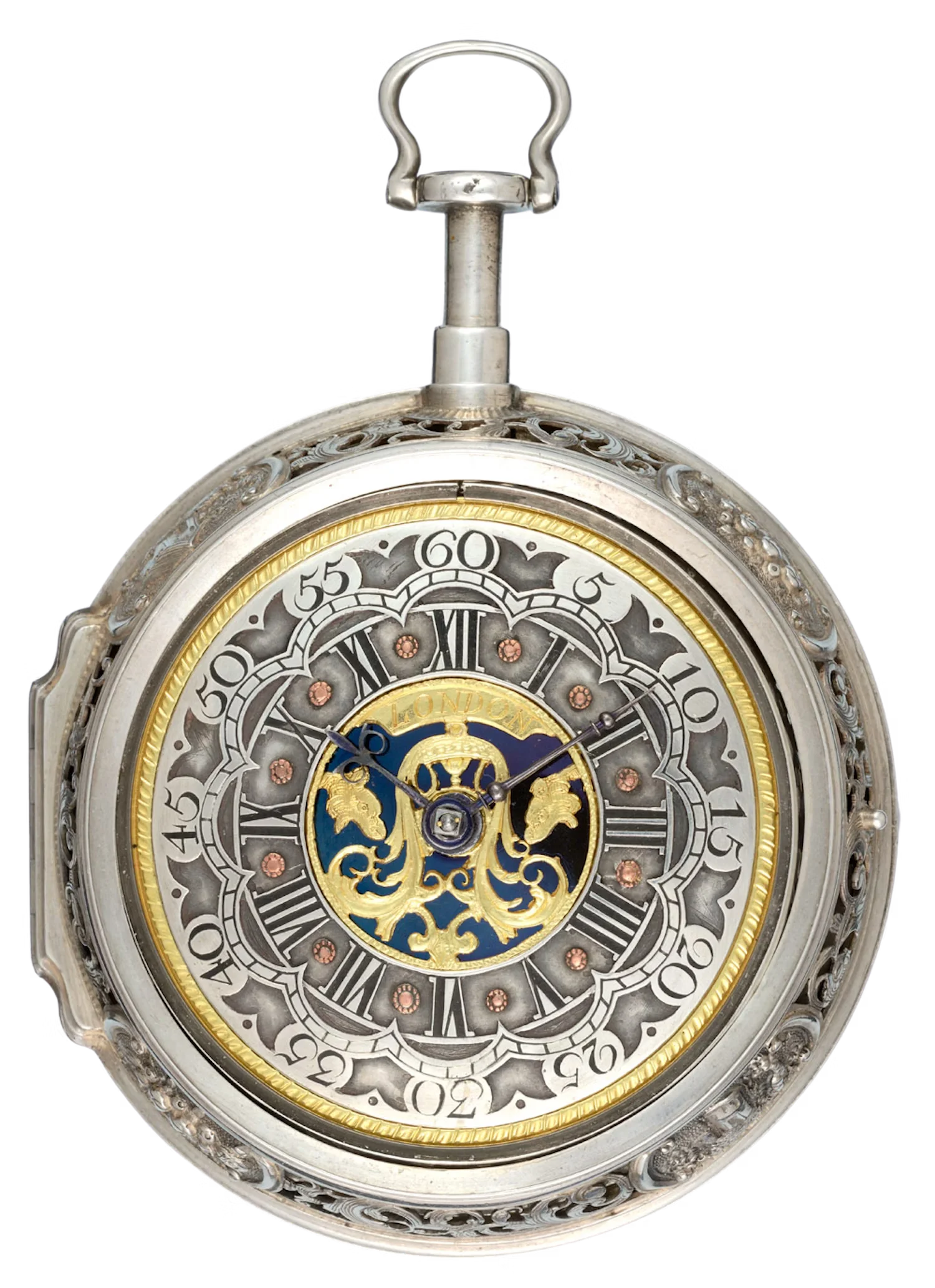
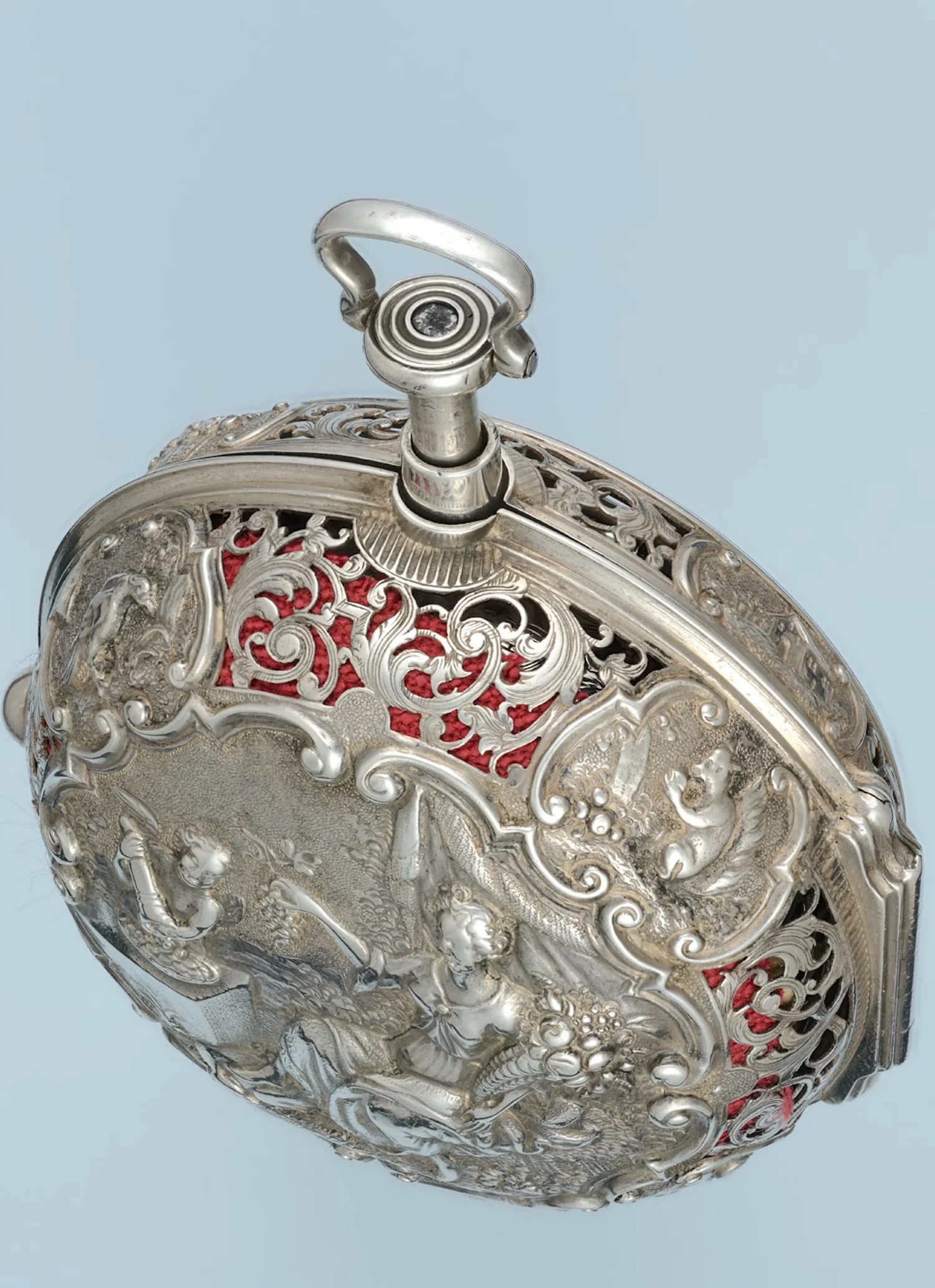
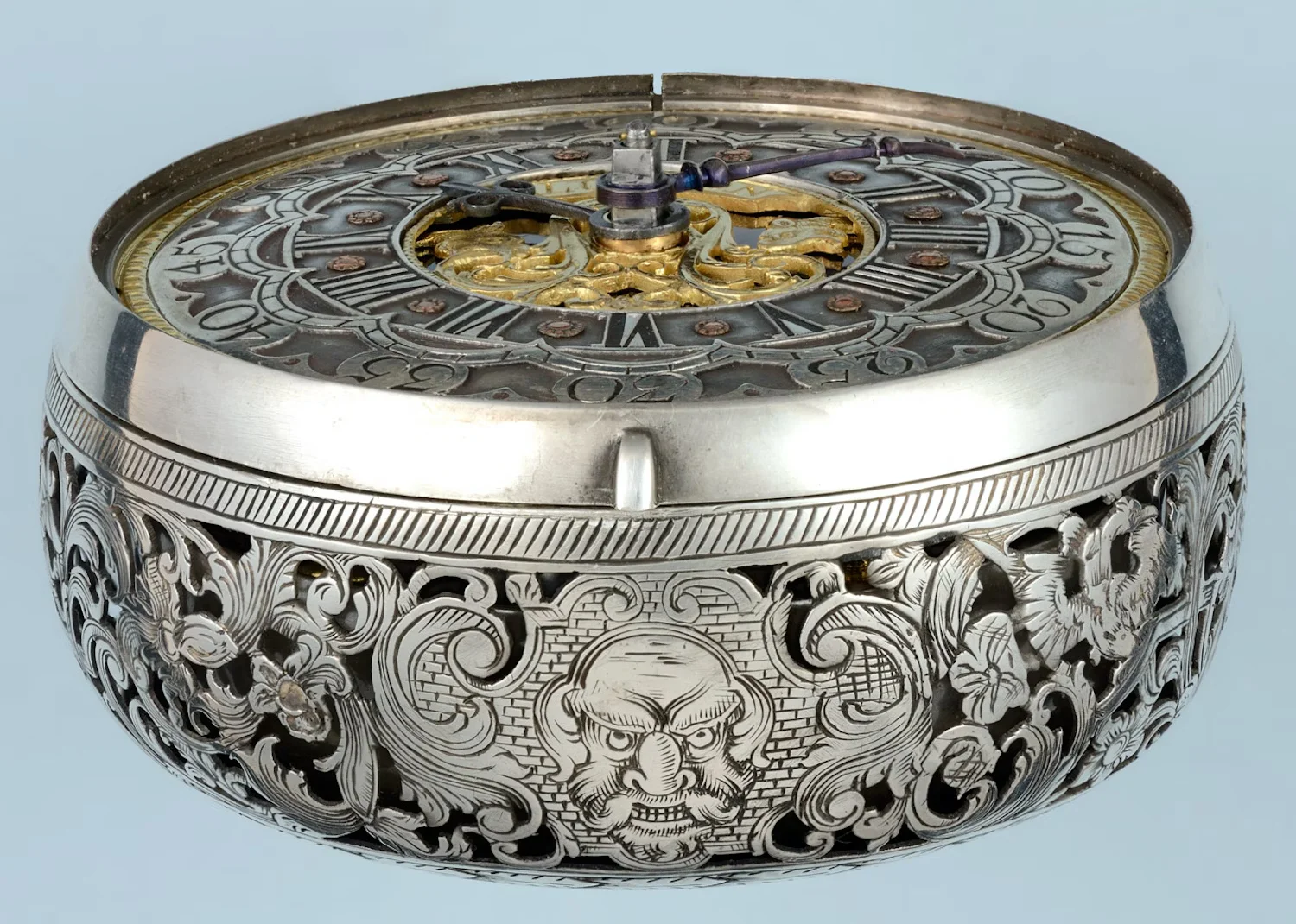
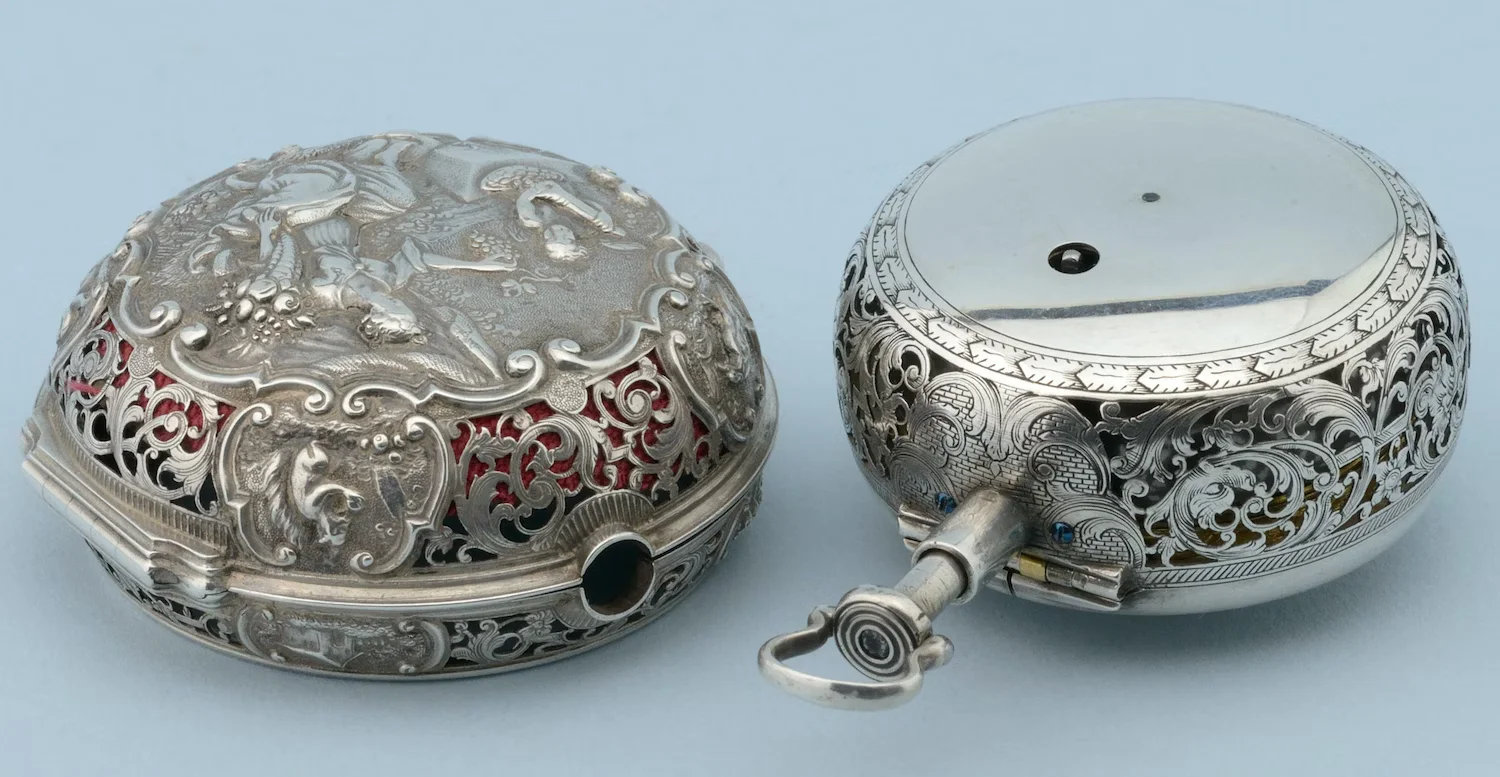
The EARLY ‌AUTOMATON REPEATER -‍ 1710 ‌is an extraordinary and exceedingly rare example ⁢of early 18th-century English horology, embodying the pinnacle of⁤ craftsmanship and innovation of its time. This quarter ⁣repeating verge watch, signed by⁢ the renowned German watchmaker Jean François Poncet, who served the ⁢duke of Saxony and the king of Poland, showcases an‍ automated dial with‍ exquisite champlevé work, depicting ⁤dragons striking a bell at its center. ​The full plate fire⁤ gilt movement, adorned with turned baluster pillars and a sophisticated fusee and chain mechanism, underscores the ⁤intricate engineering behind this timepiece. The watch features a winged cock with a mask, a pierced and engraved⁢ foot, a plain steel balance, ‍and a silver ‍regulator disc, all contributing to its remarkable precision and aesthetic appeal. Activated by ⁢a push pendant,⁢ the quarter repeater chimes⁤ on a ‌bell housed within the case, adding an auditory dimension to its visual splendor. The‌ silver inner case is intricately pierced and engraved with foliate scenes of dragons ​and birds, while the repousse outer case is adorned with a scene of Pomona, ​the Roman goddess⁢ of abundance, ⁤along‍ with cartouches⁣ featuring a dragon, fish, bird⁣ of prey, and a squirrel. Measuring 56 mm⁣ in diameter and​ 18.5 mm in depth, ‍this ⁣watch not only predates ⁣many continental ⁢automaton quarter repeaters by nearly a⁢ century but also⁢ stands as a testament to the ingenuity ‍and artistry of its era.

This is a very rare and unique early 18th Century English quarter repeating verge watch. The dial is automated with champleve work and features an intricate design of dragons striking a bell in the centre. The full plate fire gilt movement boasts turned baluster pillars and a fusee and chain with worm and wheel barrel setup. The winged cock with mask and pierced and engraved foot, along with the plain steel balance and silver regulator disc, complete this exquisite timepiece. The watch is activated by a push pendant quarter repeating on a bell inside the case. The silver inner case is pierced and engraved with foliate scenes of dragons and birds, while the repousse outer case is chased and engraved with a scene of Pomona, the Roman goddess of abundance. The sculpted sections contain cartouches with images of a dragon, fish, bird of prey, and a squirrel. This watch is signed by Jean François Poncet, a well-known German watchmaker to the duke of Saxony and king of Poland. This watch is truly an exceptional piece and predates many examples of automaton work found on continental quarter repeaters by almost a century. This masterpiece has a diameter of 56 mm and a depth of 18.5 mm.

Signed Poncet London
Circa 1710
Diameter 56 mm
Depth 18.5 mm

The Science Behind Mechanical Pocket Watch Movements

Mechanical pocket watches have been a symbol of elegance and sophistication for centuries. These intricate timepieces have captivated the hearts of watch enthusiasts and collectors alike with their precise movements and timeless designs. While many may appreciate the...

A guide to history of pocket watches

Pocket watches are a timeless classic and are often considered as statement pieces that have the ability to elevate any outfit. The evolution of pocket watches from early 16th century models to modern-day designs is fascinating and worth exploring. Knowing the history...

Guide to Storing Antique Pocket Watches: Do’s and Don’ts

Antique pocket watches are not just functional timepieces, but also cultural artifacts that have a rich history. They can be valuable collectibles, and preserving them is essential to maintain their worth. In this guide, we will discuss the do's and don'ts of storing...
Watch Museum: Discover the World of Antique & Vintage Pocket Watches
Privacy Overview

This website uses cookies so that we can provide you with the best user experience possible. Cookie information is stored in your browser and performs functions such as recognising you when you return to our website and helping our team to understand which sections of the website you find most interesting and useful.