
EARLY ROCK CRYSTAL CRUCIFIX WATCH – 1630
Signed J Gespard duVal
Circa 1630
Dimensions 39 x 53 x 25 mm
Origin French
Period 17th Century
Materials Crystal
Out of stock
£11,210.00
Out of stock
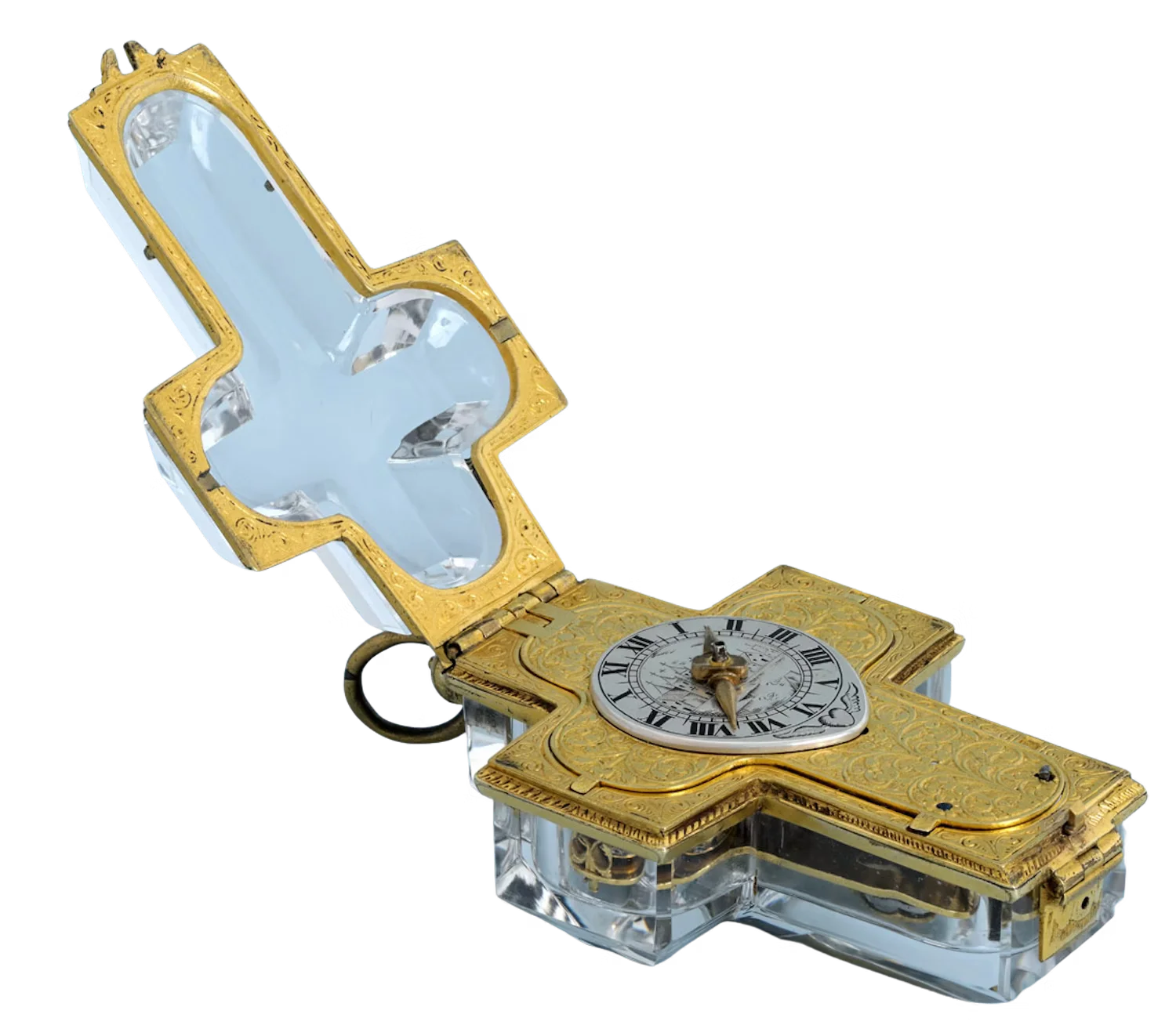
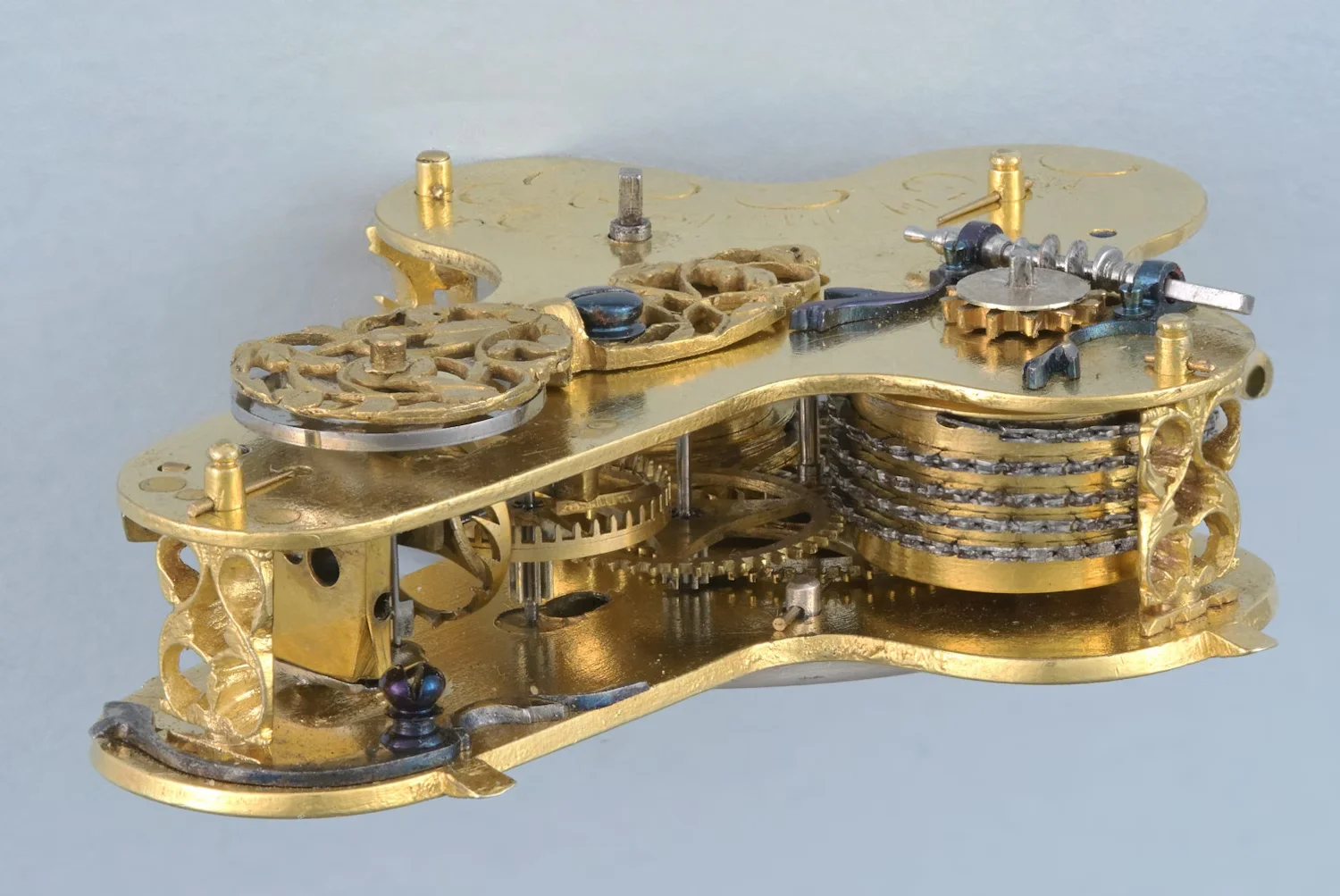
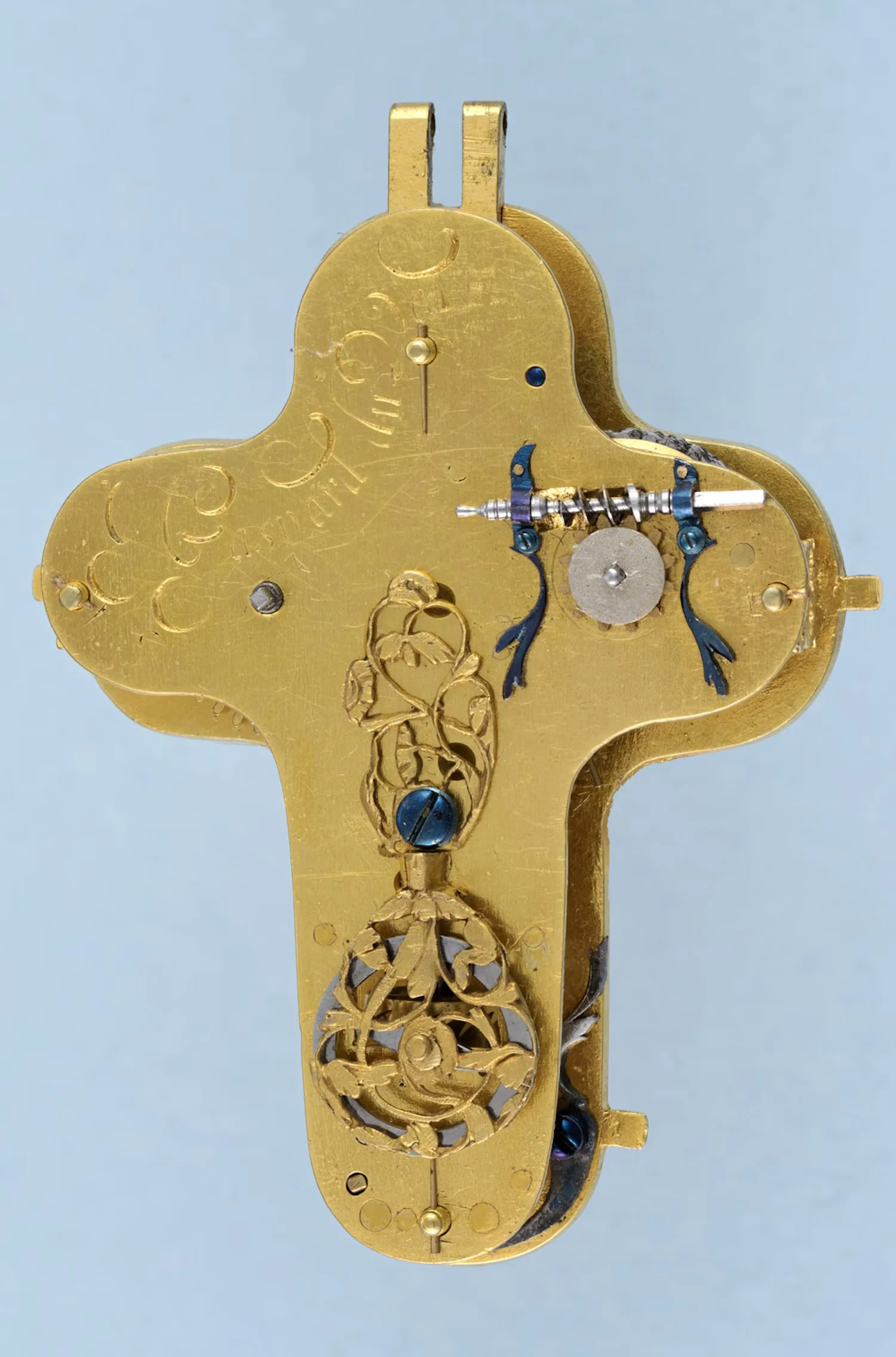
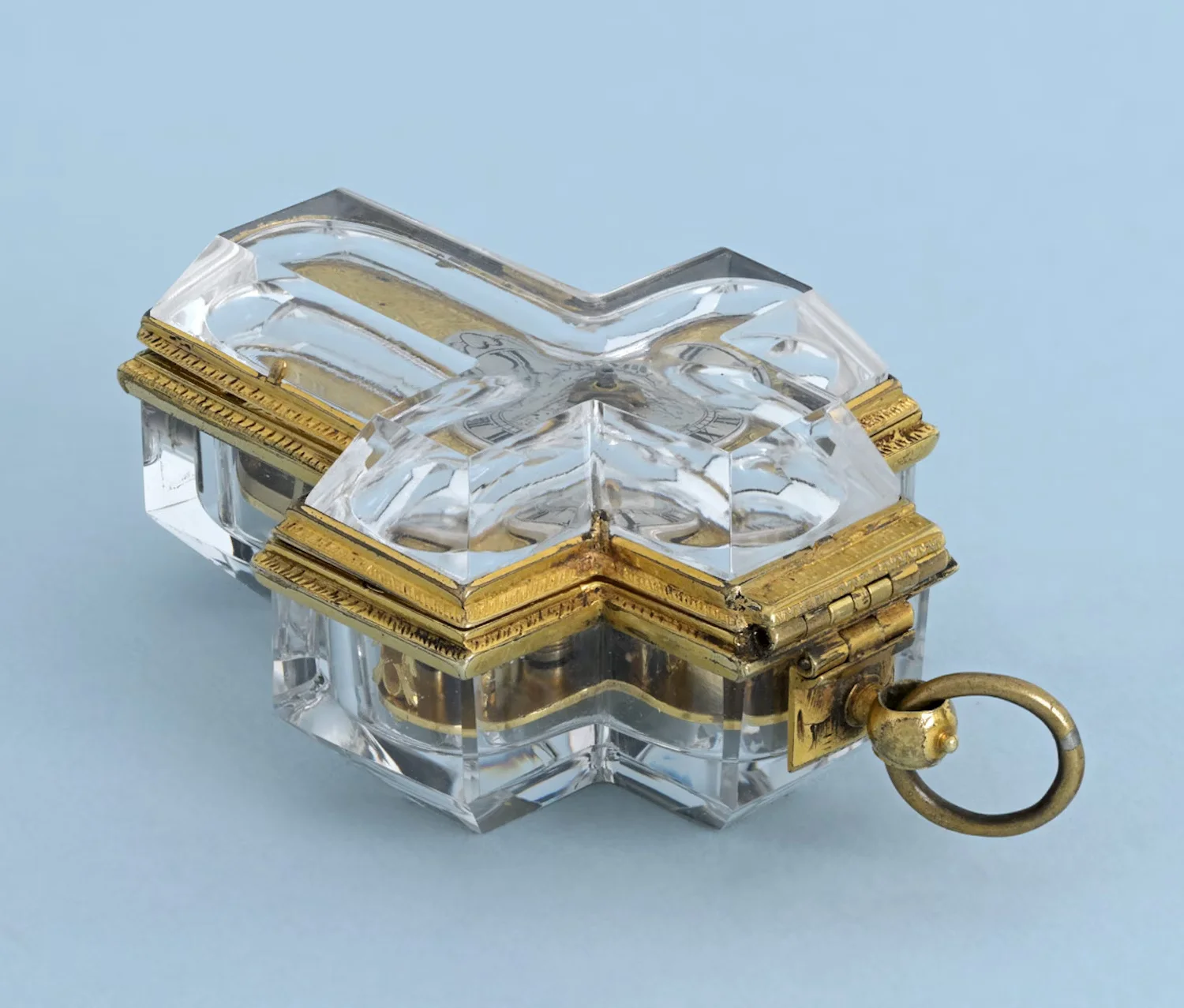
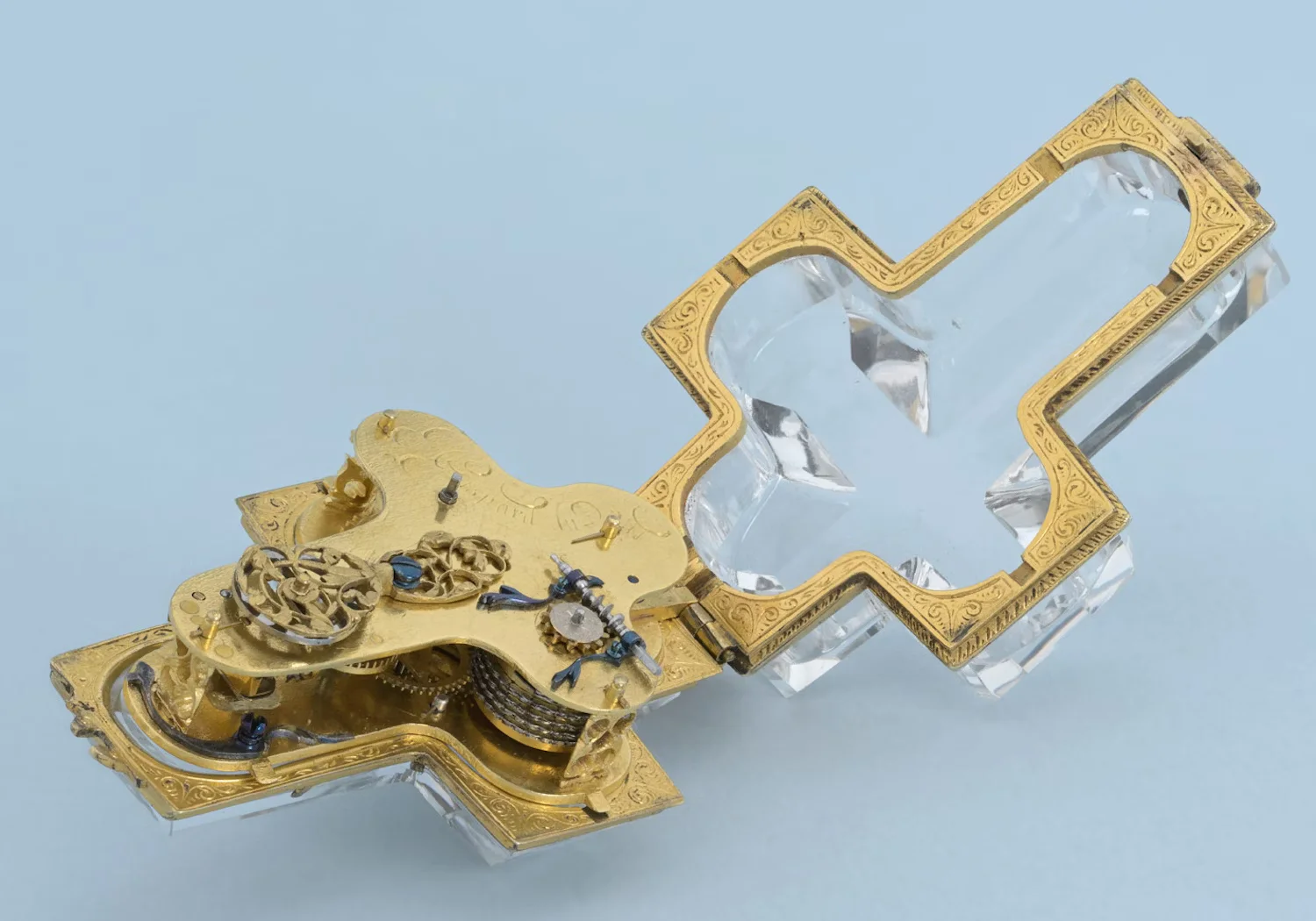
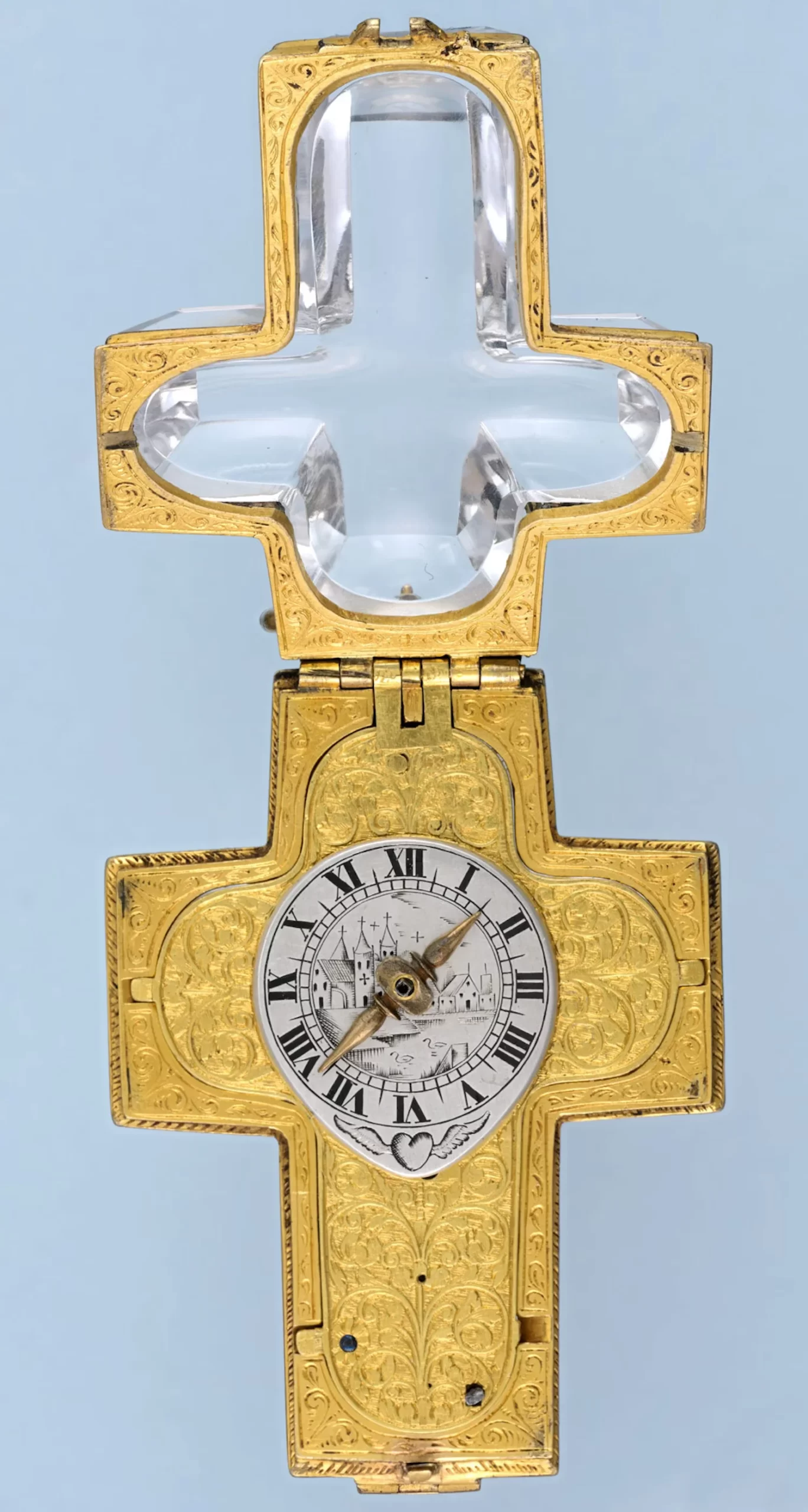
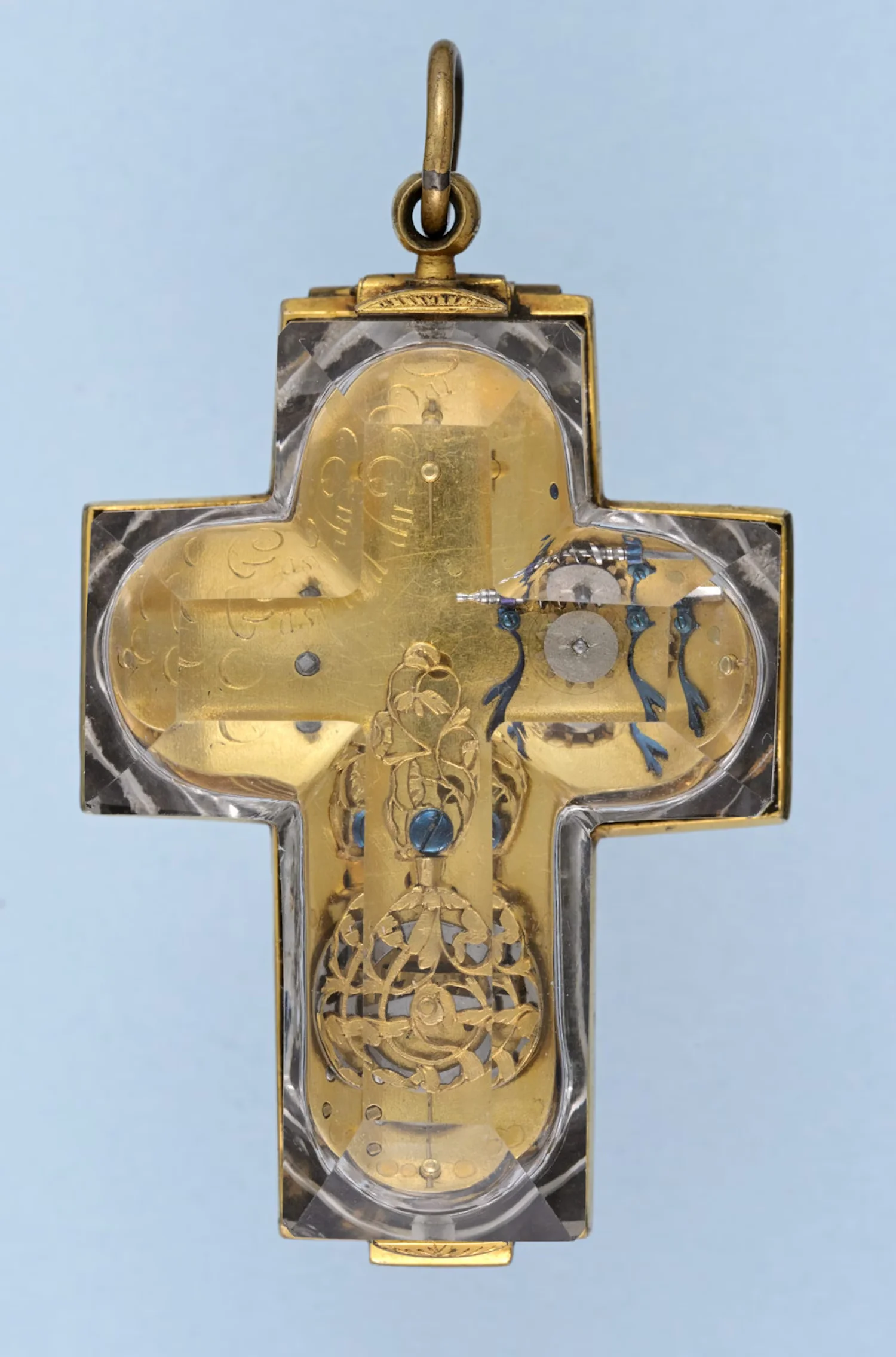
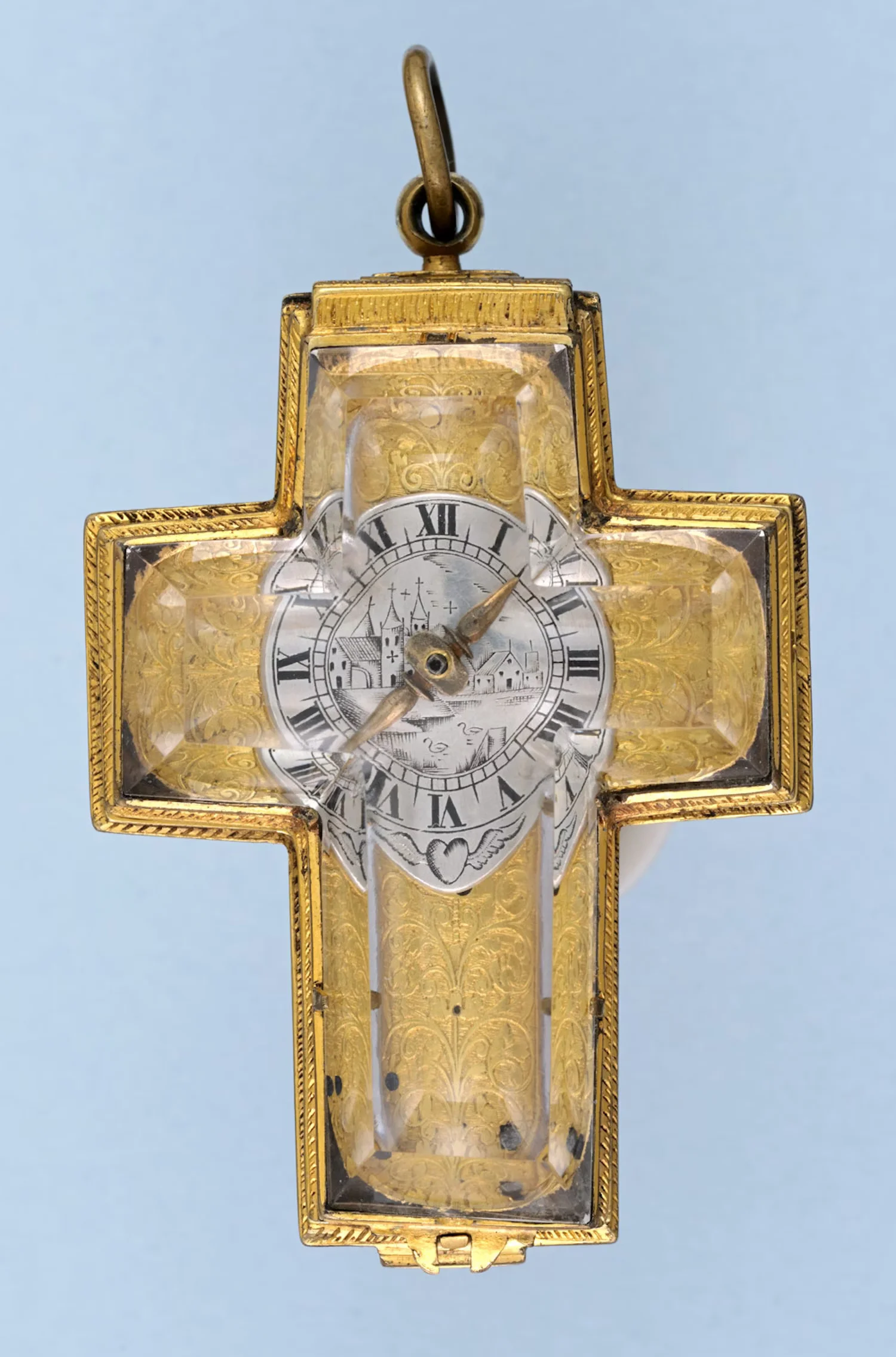
The EARLY ROCK CRYSTAL CRUCIFIX WATCH - 1630 is an exquisite example of French horological craftsmanship from the late 16th to early 17th Century, epitomizing both artistic beauty and mechanical ingenuity. This rare timepiece, shaped like a crucifix and encased in a gilt and rock crystal housing, showcases a deep full plate fire-gilt cruciform movement with intricately pierced and engraved pillars. It boasts a fusee and chain mechanism, a worm and wheel barrel setup, and a small silver index, all indicative of its sophisticated design. Despite its age, the watch has been upgraded with a later four-wheel going train, yet it intriguingly lacks a balance spring. The teardrop-shaped silver dial, adorned with a cathedral engraving and a winged heart, features Roman numerals and a single gilt hand, all enclosed within an engraved gilt crucifix-shaped mask with curved ends. Signed by J Gespard duVal and dating back to circa 1630, this watch measures 39 x 53 x 25mm and is a testament to the enduring allure of early timekeeping devices. A similar piece can be found in the prestigious collection of the Metropolitan Museum of Art in New York, further underscoring its historical significance and rarity.
This is a stunning late 16th to early 17th Century French pre-balance spring verge watch, shaped like a crucifix, enclosed in a gilt and rock crystal case. The movement has a deep full plate fire-gilt cruciform design with pierced and engraved pillars. It features a fusee and chain, along with a worm and wheel barrel setup on the plate, with a small silver index. The cock is pierced and engraved, and there is a small steel balance without a spring. The going train has been upgraded with a later four-wheel system. The small teardrop-shaped silver dial has a cathedral engraved at the center with a winged heart below it. There are Roman numerals and a small single gilt hand. The engraved gilt crucifix-shaped mask has curved ends. The fine rock crystal case is mounted in engraved gilt frames.
What makes this watch unique is that it is a rare early rock crystal crucifix watch, in excellent condition. Surprisingly, even though the train has been improved, it has not been fitted with a balance spring. The watch is signed by J Gespard duVal and was made around 1630. It is 39 x 53 x 25mm in size, and a similar octagonal crystal watch can be found in the Metropolitan Museum of Art in New York.
Signed J Gespard duVal
Circa 1630
Dimensions 39 x 53 x 25 mm
Origin French
Period 17th Century
Materials Crystal