
THREE COLOUR GOLD VERGE – Circa 1780
Signed A James Change Alley London
Circa 1780
Diameter 42 mm
Depth 10 mm
Out of stock
£2,100.00
Out of stock
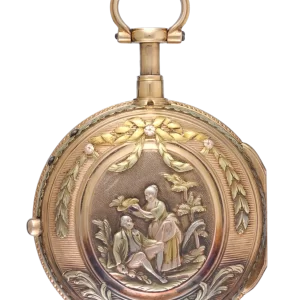
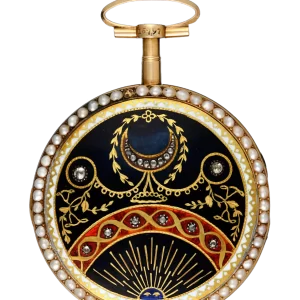
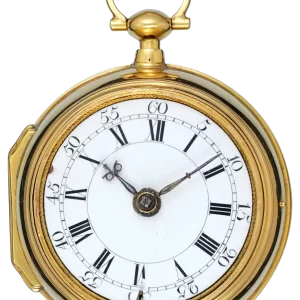
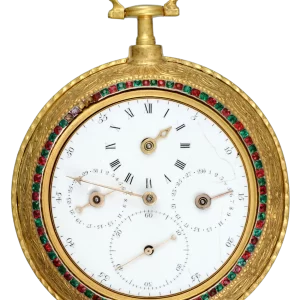
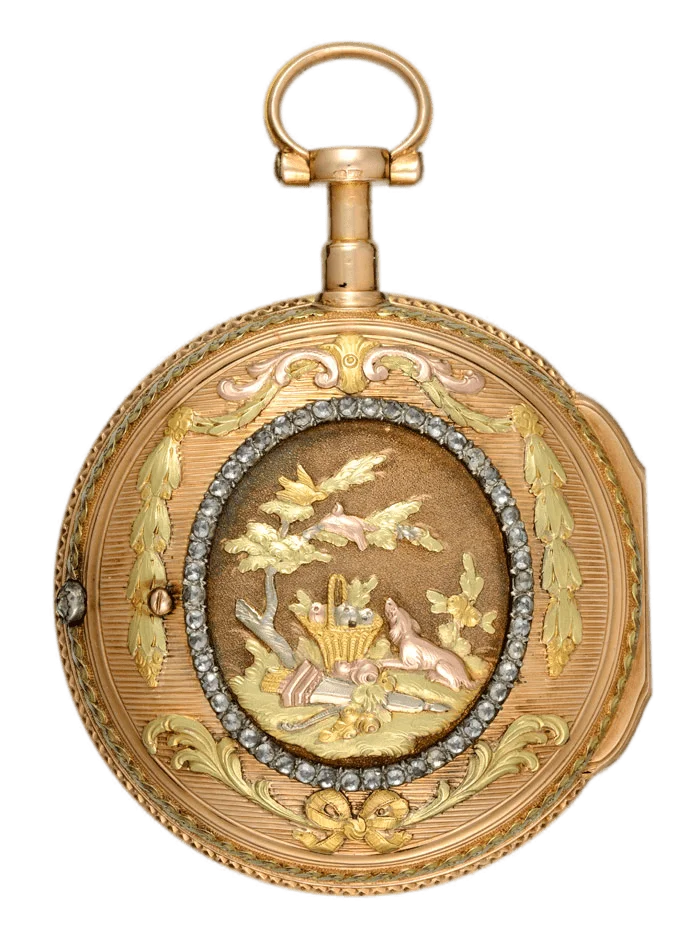
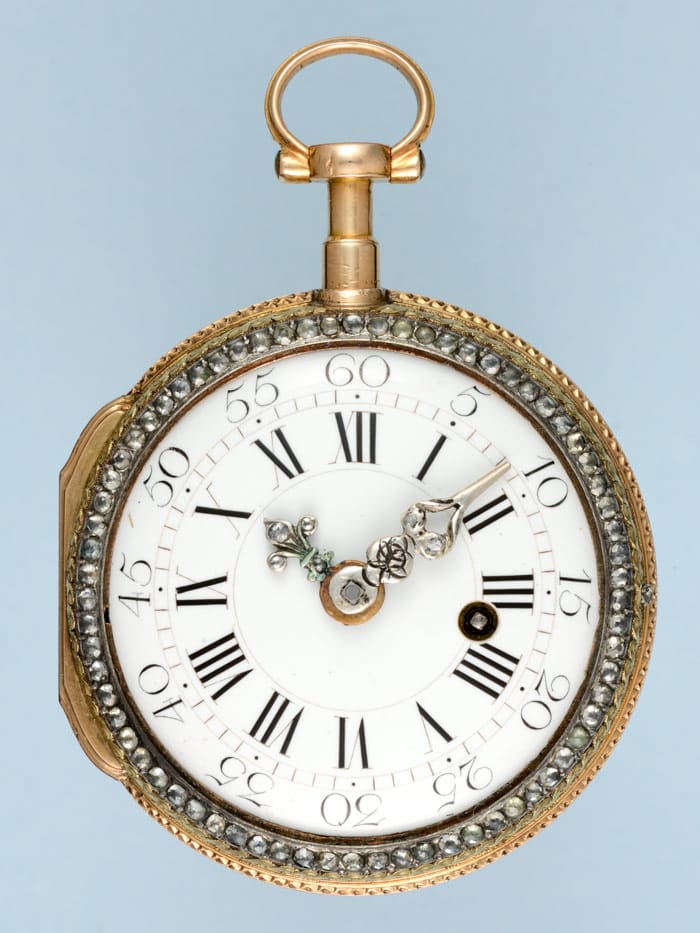
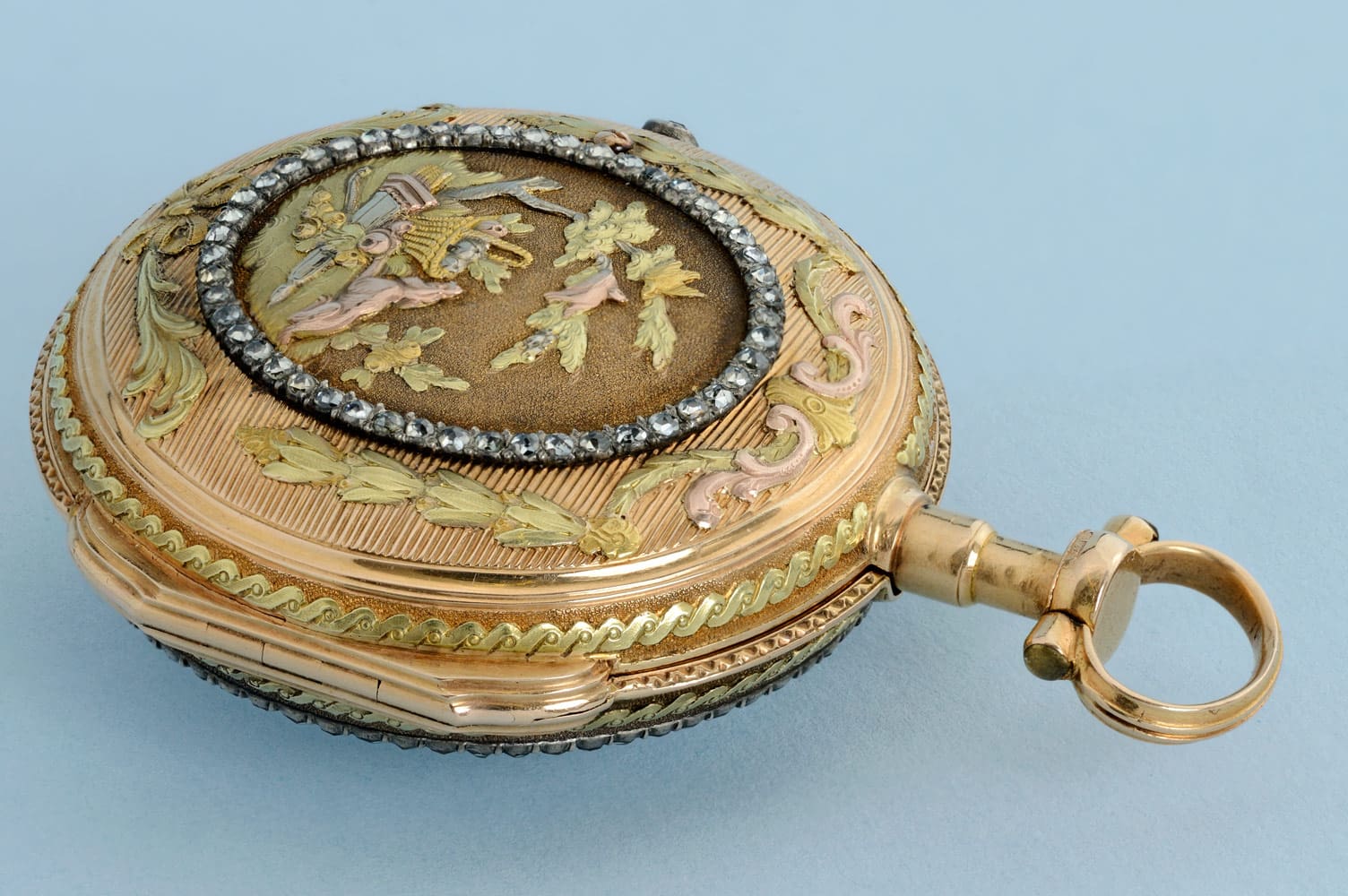
Step back in time with the exquisite THREE COLOUR GOLD VERGE, a remarkable timepiece from circa 1780 that epitomizes the artistry and craftsmanship of the late 18th Century. This historical watch showcases a verge movement encased in a breathtaking stone-set three-color gold consular case, making it a true collector's item. The full plate fire gilt movement, adorned with round pillars, features intricate engravings, a pierced cock, and a silver regulator disc, all of which highlight the meticulous attention to detail. Complementing the movement is a white enamel dial with Roman and Arabic numerals, seamlessly blending functionality with elegance. The 18 carat continental consular case stands out with an engine-turned back, adorned with applied three-color gold decorations and bordered by white stones. The bezel, crafted from two-color gold and set with a single row of white stones, further enhances the watch's luxurious appeal. Unique in its combination of a continental case and dial with an English movement, this timepiece likely reflects either a bespoke commission or the importation of components by an English watchmaker, adding an intriguing layer to its provenance. Signed by A James of Change Alley, London, this 42 mm diameter and 10 mm depth watch is not just a timepiece but a testament to the rich heritage and exceptional skill of its era.
This late 18th Century watch features a verge movement housed in a stunning stone-set three-color gold consular case. The full plate fire gilt movement has round pillars and is beautifully engraved with a pierced cock and silver regulator disc. It also boasts a plain three-arm steel balance and a blue steel spiral hairspring. The white enamel dial, with its Roman and Arabic numerals, is wound through and complements the overall aesthetic of the watch. The 18 carat continental consular case is a highlight, featuring an engine-turned back with applied three-color gold decoration and a border of white stones. The bezel is also two-color gold and set with a single row of white stones. What makes this watch particularly unique is that it combines a continental case and dial with an English movement, suggesting either a special customer request or the importation of the case and dial by an English watchmaker. Overall, this timepiece is a striking example of the craftsmanship and attention to detail characteristic of the late 18th Century.
Signed A James Change Alley London
Circa 1780
Diameter 42 mm
Depth 10 mm