
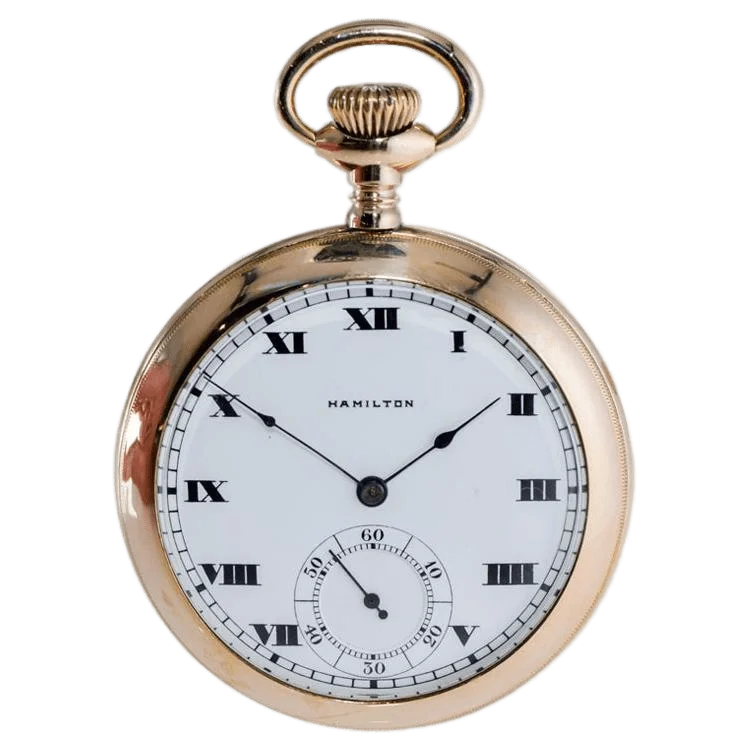


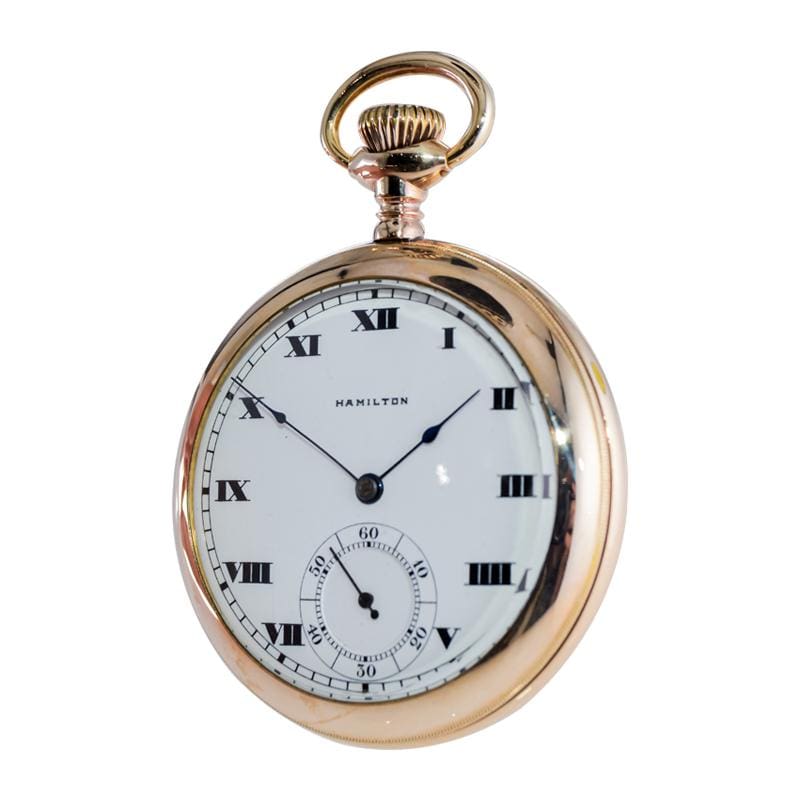
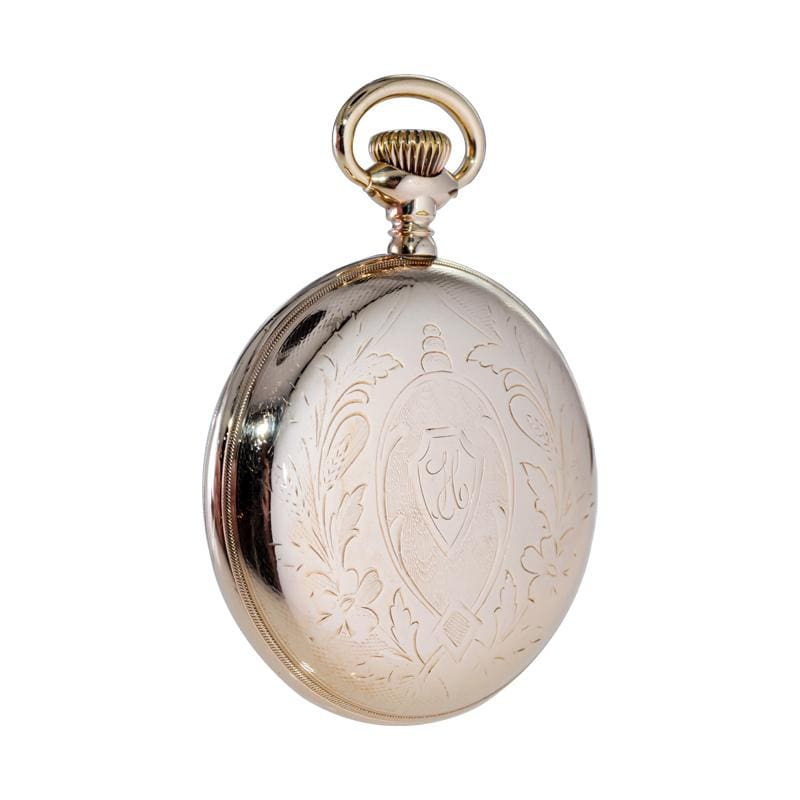
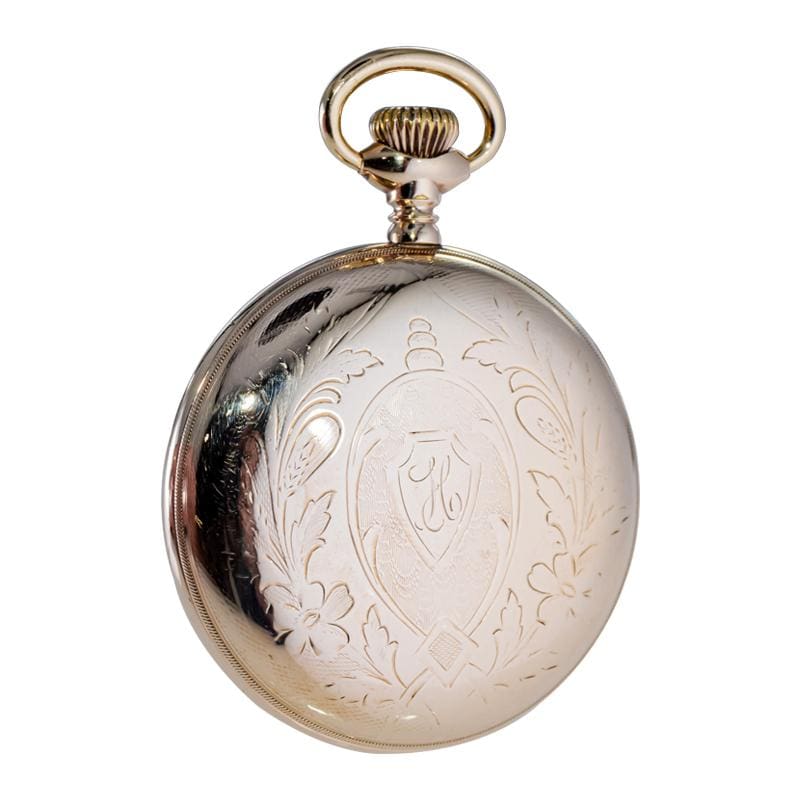
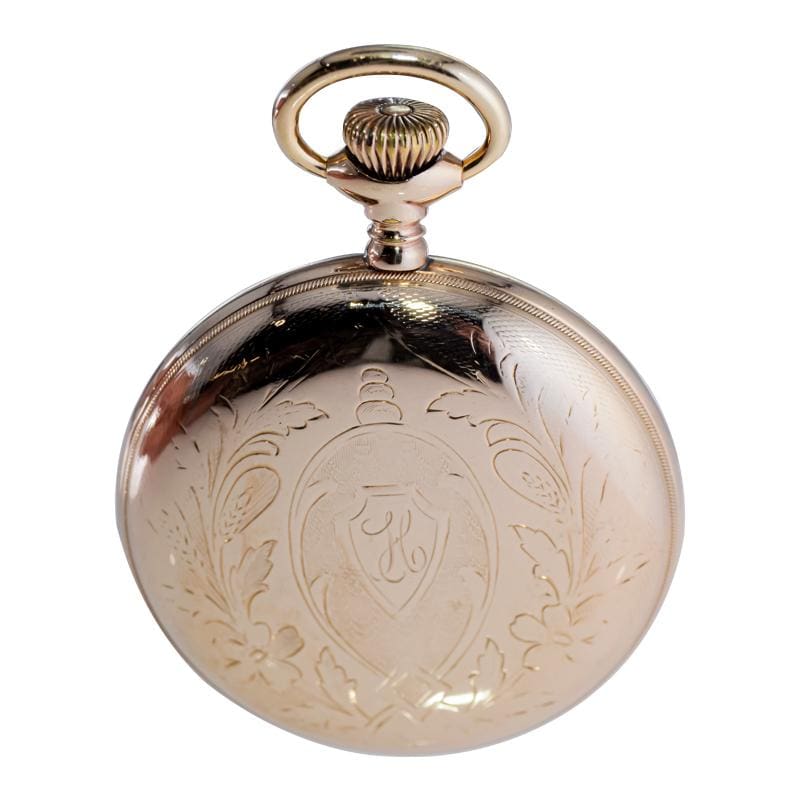

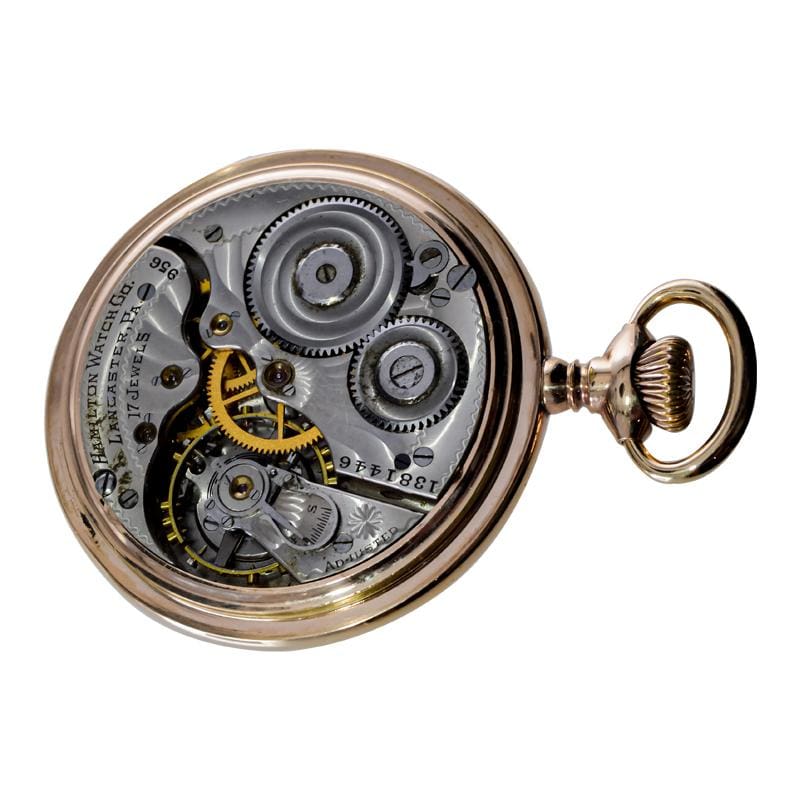
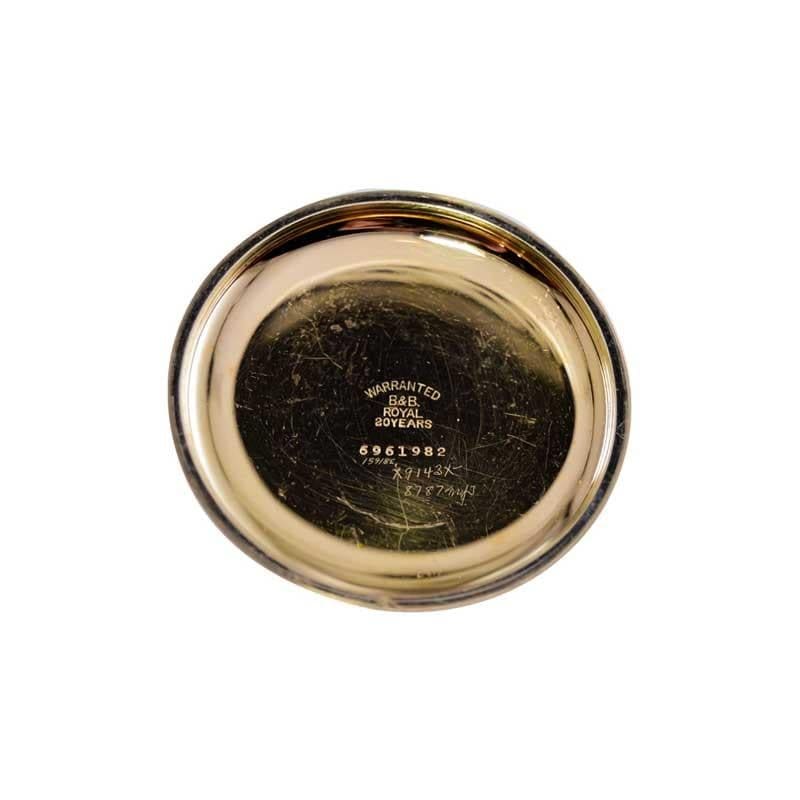
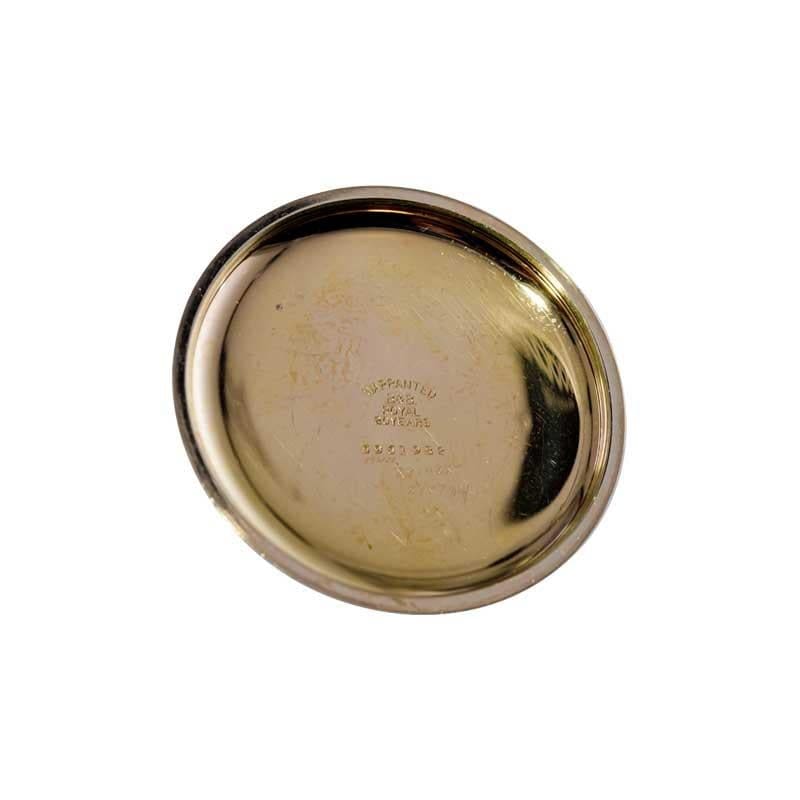
Hamilton Gold Filled Pocket Watch with Kiln Fired Dial – 1916
Creator: Hamilton
Place of Origin: Switzerland
Period: 1910-1919
Date of Manufacture: 1916
Condition: Excellent
Original price was: £450.00.£320.00Current price is: £320.00.
The Hamilton Gold Filled Pocket Watch with Kiln Fired Dial from 1916 is a testament to the enduring legacy of the Hamilton Watch Company, established in 1892 in Lancaster, Pennsylvania. Renowned for their precision and reliability, Hamilton watches were initially created to meet the stringent accuracy standards required by the nation's railroads, quickly earning a reputation as a leading manufacturer of pocket watches. Their commitment to excellence extended to supplying the US military with dependable timepieces during both World Wars, including the development of the world's most accurate navigational chronometers for the Navy. Despite a setback in the 1950s with the premature release of their electric watch, Hamilton's dedication to quality craftsmanship has ensured that their watches remain highly valued and functional even today. This particular pocket watch, originating from 1916, exemplifies the brand's hallmark of elegance and durability, with its gold-filled case and kiln-fired dial, making it a remarkable piece of horological history that continues to captivate collectors and enthusiasts alike.
The Hamilton Watch Company was established in 1892 in Lancaster, Pennsylvania, with the aim of creating high-quality, American-made watches. In response to the critical need for accuracy on the nation's railroads, laws were passed in 1891 establishing set standards of accuracy, inspiring Hamilton's creation. They quickly became a leading manufacturer of pocket watches and supplied watches to the US military.
Hamilton's watches were both elegantly styled and dependable, achieving mass-produced perfection. Even today, disassembling and reassembling 100 old Hamiltons will result in 100 watches that will work perfectly with almost no adjustment, a true achievement.
During World War II, Hamilton supplied watches to the US military again and produced the world's most accurate navigational chronometers with contracts for the Navy. They also developed several new technologies for military watches. After the war, Hamilton continued to innovate and introduced several new watch designs for the future.
In the 1950s, Hamilton made a poor executive decision by launching their first electric or battery watch before all the "bugs" were worked out, leading to many faulty watches. Meanwhile, Bulova launched their version of the electric watch called the Accutron, which did not fail. The failure of Hamilton's electric watch was a significant event that ultimately led to the company's demise.
However, Hamilton's watches still live on, and parts are readily available. With only average care, an average Hamilton can last for hundreds of years. The company's commitment to excellence has never been surpassed by any other watch company.
Creator: Hamilton
Place of Origin: Switzerland
Period: 1910-1919
Date of Manufacture: 1916
Condition: Excellent
Related products
-
Sale!
Waltham Yellow Gold Filled Art Nouveau Pocket Watch – 1906
Original price was: £490.00.£360.00Current price is: £360.00. -
Sale!
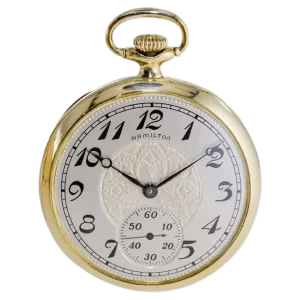
Hamilton Yellow Gold Filled Enamel Dial Railway Pocket Watch – 1917
Original price was: £400.00.£290.00Current price is: £290.00. -
Sale!
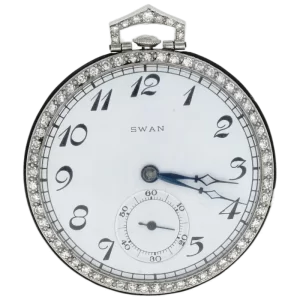
British Swan Platinum Diamond Enamel Pocket Watch – 20th Century
Original price was: £1,850.00.£1,220.00Current price is: £1,220.00. -
Sale!
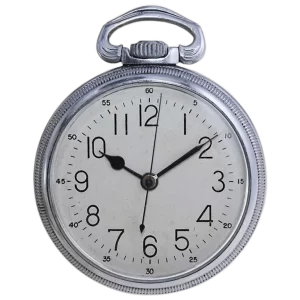
Hamilton Steel Military Timer Pocket Watch – Circa 1940’s
Original price was: £480.00.£350.00Current price is: £350.00.