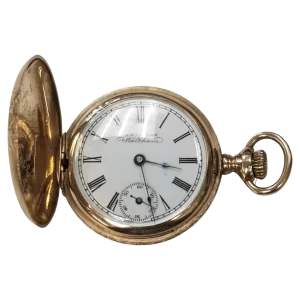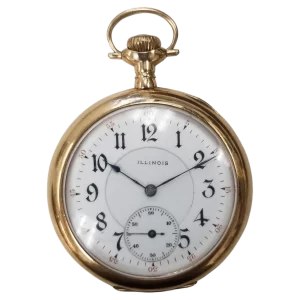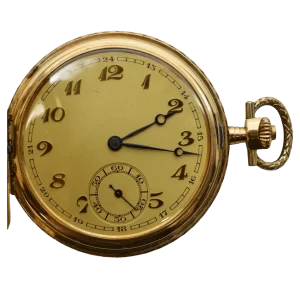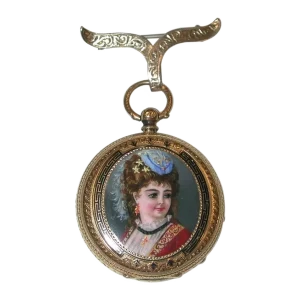
Determining the size of an antique pocket watch can be a nuanced task, especially for collectors who are keen on identifying the precise measurements of their timepieces. When a collector refers to an American watch’s “size,” they are generally talking about the diameter of the watch movement, not the case, as the same movement can fit into various case sizes. European watches, in contrast, are typically measured in millimeters, with sizes ranging from 30-35mm for ladies’ watches to 50-60mm for men’s watches. American watches, however, use a unique sizing scale where most fall between 0 and 18 size, with 0 being the smallest and 18 the largest. Common sizes for men’s watches are 18, 16, and 12, while for ladies’ watches, they are 8, 6, and 0. The size 10 watch is versatile, often considered unisex. The article provides a detailed table to convert these American sizes into inches, but measuring these sizes can be tricky due to their close proximities and the difficulty of measuring odd sizes. The size of the plate under the dial is usually the reference point, but this can vary, making it challenging for novices. Experienced collectors, however, can often identify the size by simply looking at the movement, a skill honed through years of experience. Recognizing different sizes and models from various American watch companies can also aid in identification, as movements of different size watches often look distinct from one another.
When a collector refers to an American watch’s “size,” he or she is generally referring to the diameter of the watch movement only, not the case. The same size watch movement will usually fit in a variety of different size cases, so the size of the case is usually not helpful in identifying the watch.
European watches are typically referred to by their size in millimeters. A small ladies’ watch might be 30 or 35mm, whereas a men’s watch could be upwards of 50 or 60mm.
American watches, on the other hand, have their own special sizing scale. Most American watches fall between 0 and 18 size, with 0 being the smallest and 18 being the largest. The most common sizes are 18, 16 and 12 for men’s watches, and 8, 6 and 0 for ladies’ watches. The size 10 watch is right in the middle and is generally considered to be either a men’s or a ladies’ watch.
The following table shows the standard American watch movement sizes and their equivalent size in inches:
| Watch Size | Size in Inches |
| 18 | 1 23/30 [1.8] |
| 16 | 1 21/30 [1.7] |
| 12 | 1 17/30 [1.566] |
| 10 | 1 ½ [1.5] |
| 8 | 1 13/30 [1.433] |
| 6 | 1 11/30 [1.366] |
| 0 | 1 5/30 [1.166] |
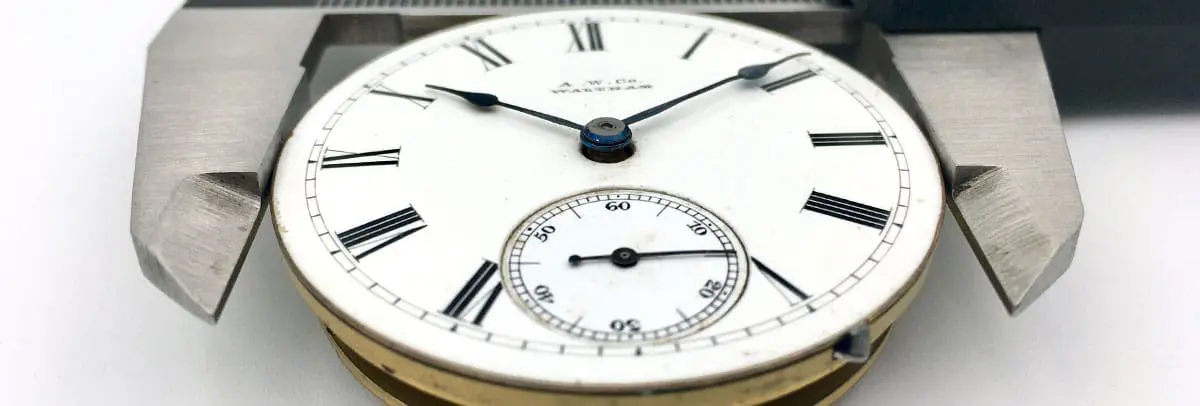
As you might expect, it can be a bit tricky measuring a watch movement to determine its size, not only because many of the sizes are so close to each other, but also because it’s not that easy to measure such odd sizes in the first place. Also, the sizing chart above refers to the size of the plate under the dial [which may or may not be the same diameter as the dial itself], and on some watches that plate has a slightly different diameter than the plate visible when simply viewing the movement. Experienced collectors, however, can often tell the size of most watches simply by looking at the movement and comparing it to other, similar, watches they have seen before. As with any skill, this ability comes primarily through experience, but here are some quick pointers when dealing with American watches:
With many American watch companies, the movements of different size watches look completely different from other sizes made by the same company. Therefore, once you learn to recognize a particular size and model you can usually use that knowledge to identify similar watches.
Most 18 size American watches were made with “full plate” movements. This means that when you open the back of the watch you can’t see any of the inner workings of the watch movement – just the balance wheel and perhaps the winding wheels [the wheels that turn when you wind the watch], as shown in the following examples:
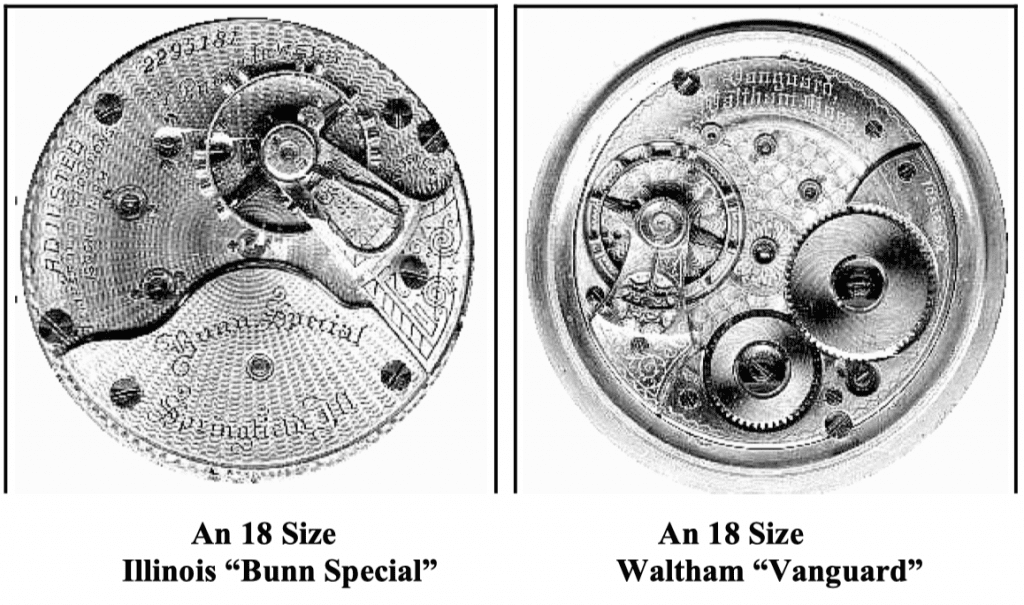
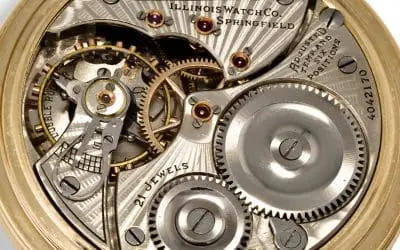
Most smaller watches, on the other hand, have movements where the top plate is divided into two or more “bridges.” On these watches it is usually possible to see into the inner workings of the movement to some degree and one or more gears can often be seen, as shown in the following examples. Note that watch movements where the bridges cover most, but not all, of the inner workings are frequently referred to as “3/4 plate” movements.
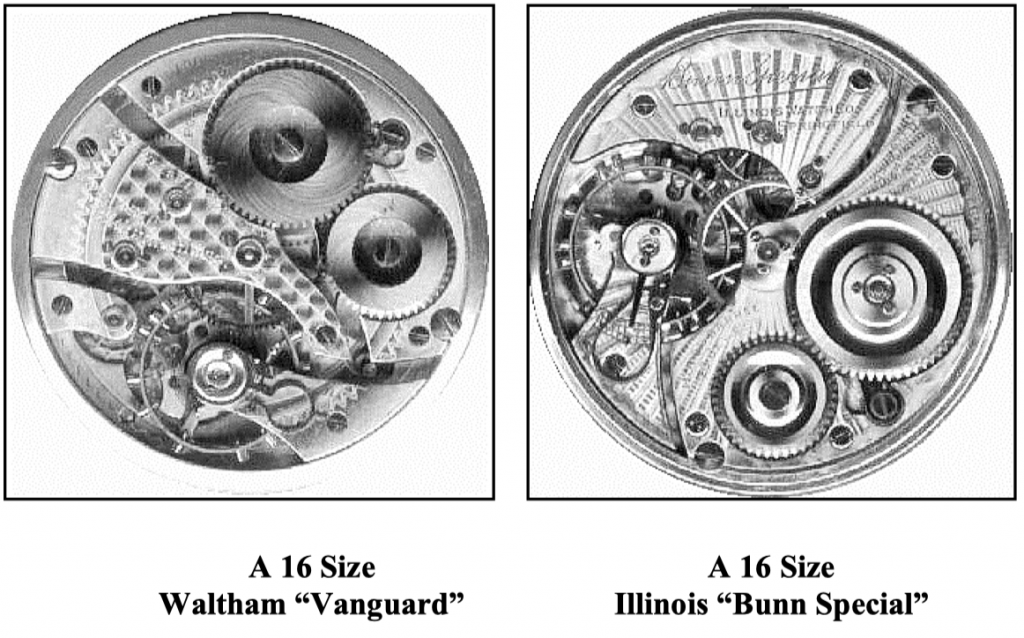
Earlier American watches from the 1800’s were most often 18 size, whereas 16 size watches became popular for men after the turn of the century. By the 1920’s 12 size watches became very popular for men as well.
Until the early 1900’s, railroad grade watches could be either 18 size or 16 size. By the 1930’s however, most railroad watches were 16 size, and this later became a requirement for railroad watches.